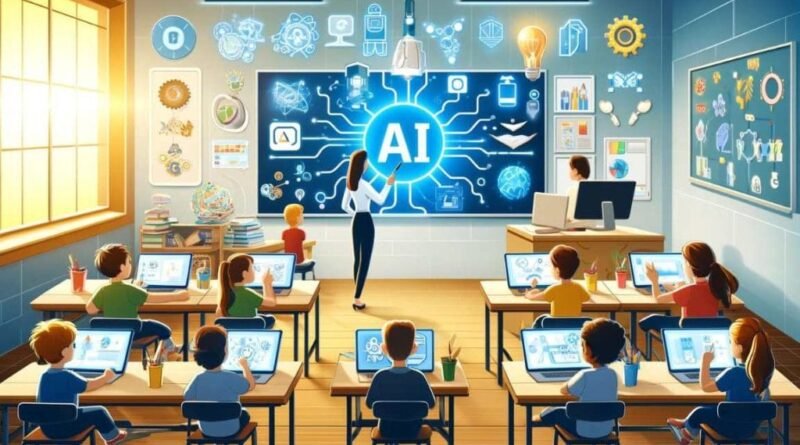
The Future of Learning: How AI Is Changing Education Worldwide
A student struggling with algebra receives instant, personalized explanations tailored to their specific misunderstanding. A teacher identifies at-risk students weeks before traditional warning signs appear. A school administrator optimizes class schedules to maximize learning outcomes based on thousands of data points. These scenarios aren’t experimental projects in elite research institutions, they’re everyday realities in schools worldwide,e implementing AI-powered School management software that’s fundamentally transforming how education operates.
Artificial intelligence is reshaping education more profoundly than any innovation since the printing press, democratizing personalized learning and making excellence accessible at an unprecedented scale.
The Problem: One-Size-Fits-All Education Fails Individual Students
Traditional education operates on industrial-age assumptions: students of similar ages learn the same material at the same pace through identical methods. This standardization ignores fundamental truths about human learning: everyone processes information differently, starts from different knowledge levels, and possesses unique strengths and challenges.
The consequences are severe. Advanced students languish unchallenged while struggling students fall progressively further behind. Teachers managing 30+ students can’t realistically personalize instruction for each individual. Identifying learning gaps requires time-consuming assessments that reveal problems only after significant damage occurs.
Meanwhile, educators drown in administrative work grading assignments, creating lesson materials, analyzing student data, responding to routine questions, and tasks that consume time better spent on human connection and individualized support.
This system produces mediocre results for most students, excellence for a few, and failure for too many. We know personalized instruction works; we’ve simply lacked the tools to deliver it at scale—until now.
The Solution: AI-Powered Transformation
Artificial intelligence is solving education’s most persistent challenges through technologies that augment human capabilities rather than replacing them.
Personalized Learning Pathways
AI platforms analyze individual student performance in real-time, identifying knowledge gaps, learning pace, and optimal instructional methods. Content adapts automatically—presenting additional practice for struggling concepts, accelerating pace when students demonstrate mastery, and adjusting explanation styles based on what resonates with each learner.
This personalization happens continuously without teacher intervention, though teachers retain oversight and can override AI recommendations based on their professional judgment and knowledge of each student.
Intelligent Tutoring Systems
AI tutors provide 24/7 support, answering student questions with patient, personalized explanations. Unlike human tutors who may tire or become frustrated, AI maintains consistent encouragement while adapting explanations until students achieve understanding.
These systems don’t replace teachers; they extend their reach, providing the individualized attention every student deserves, but no single teacher could physically provide to all students simultaneously.
Predictive Analytics and Early Intervention
AI analyzes patterns across multiple data sources—assessment scores, attendance records from Biometric Attendance System tools, assignment submission rates, behavioral notes—to identify students at risk of academic struggles or dropout long before traditional indicators would reveal problems.
Teachers receive actionable alerts: “Student X showsa declining pattern consistent with disengagement” or “Student Y’s performance in Unit 3 suggests foundation gaps in prerequisite skills.” This early warning enables proactive intervention instead of reactive remediation after failures accumulate.
Automated Administrative Tasks
AI handles routine grading for objective assessments, freeing teachers to focus on evaluative work requiring human judgment. It generates lesson plan suggestions, creates customized assignments, and produces initial drafts of parent communication that teachers can personalize.
Administrative platforms use AI to optimize scheduling, predict enrollment patterns, identify operational inefficiencies, and automate routine communications—transforming school operations from reactive firefighting to strategic management.
Natural Language Processing for Learning Support
AI-powered writing assistants help students improve essays through instant feedback on grammar, structure, and argumentation. Language learning apps provide pronunciation correction and conversational practice. Reading comprehension tools adjust text complexity to optimal challenge levels while building vocabulary systematically.
Accessibility Enhancement
AI makes education more accessible for students with diverse needs. Real-time transcription helps hearing-impaired students. Text-to-speech supports learners with visual impairments. Translation tools assist English language learners. Adaptive interfaces accommodate different learning disabilities.
Global Implementation Examples
Schools worldwide demonstrate AI’s transformative potential. Asian institutions use AI platforms to achieve remarkable math proficiency improvements. European universities employ AI advising systems that significantly increase student retention. African schools leverage AI-powered mobile learning to overcome infrastructure limitations.
These successes share common threads: they view AI as augmenting rather than replacing teachers, they invest in educator training, they maintain focus on learning outcomes rather than technological sophistication, and they address privacy and ethical concerns proactively.
Addressing Valid Concerns
AI in education raises legitimate questions about privacy, bias, and the role of human connection in learning. Responsible implementation requires transparent data practices, bias testing and mitigation, human oversight of AI decisions, and continuous evaluation of impact on student wellbeing and outcomes.
The goal isn’t creating teacher-less classrooms, it’s empowering educators to do what humans do best (inspire, mentor, build relationships) while AI handles tasks computers excel at (data analysis, pattern recognition, repetitive operations).
Conclusion
Artificial intelligence represents education’s evolution from mass production to mass customization—maintaining scale while delivering personalization previously available only to the wealthy few who could afford private tutors and small classes.
The schools embracing AI thoughtfully aren’t abandoning educational fundamentals; they’re finally achieving the individualized instruction educators have always advocated but lackedthe tools to deliver practically.
As AI capabilities expand, the education gap between institutions that embrace these tools and those that resist them will widen dramatically. The question isn’t whether AI will transform education—it’s whether your institution will lead this transformation or struggle to catch up while competitors reap the benefits of early adoption.
The future of learning is here. It’s personalized, data-driven, accessible, and powered by AI working in partnership with dedicated educators committed to student success.